
In our Reading Tablature lesson, we learned about harmony. Harmony is defined as two or more simultaneously occurring notes, more commonly referred to as chords. That’s what this lesson is all about, but before we dive in let’s go over some fundamentals that we have learned in previous lessons to aid us in effectively playing chords.

A full understanding of your guitar's anatomy and the guitar string names and numbering system will aid in your understanding of tablature. Let's have a look at this before we continue into our exploration of guitar tablature. Check out The Fretboard lesson.
Frets are the metal strips on the neck of your guitar. If you’re holding the guitar, the first one is nearest the headstock and they go up the neck one by one. In Tab, you’re told which you need to press.
You’ll often, but not always, be shown which finger to use. The numbering system goes like this: the index finger is 1, middle is 2, ring finger is 3, and pinky is 4.
Strings aren’t referred to by the key they’re in, they are numbered 1 through 6. The thinnest string is number 1, all the way through to the thickest string (number 6).
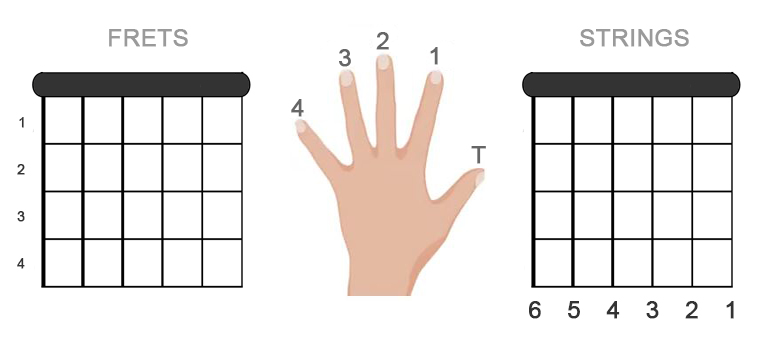
A chord is two or more notes fretted on the fretboard and played at the same time. One of the best tools available to aid in your understanding of how to play chords is a wonderful little graphic known as a chord box, or a chord block diagram. This handy little tool will show you everything you need to know about how to fret and play a chord. Check out this video from Berklee Online to learn more about written guitar notation.
On the left is an empty chord box. On the right is an example of a C major chord mapped out on the chord box.
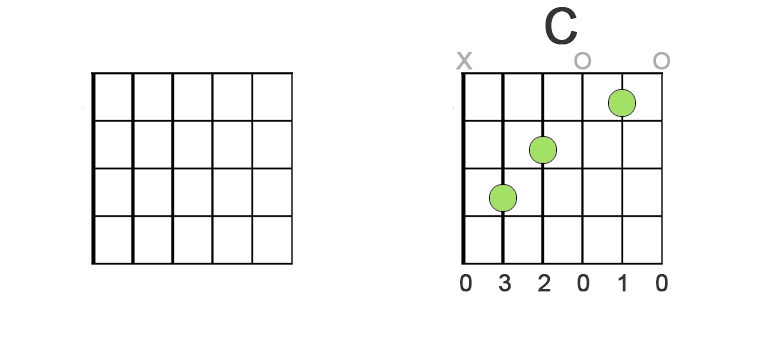
So how do we understand and interpret a chord using this tool? A chord box is a graphical representation of the first four (sometimes five) frets of a guitar neck as well as each of the six strings. Symbols are placed on the chord box that tell you which finger stops which string at which fret. Take a look at the following explanation of the C major chord box.
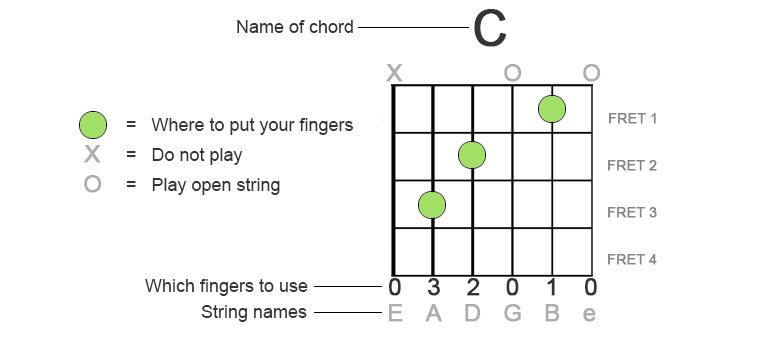
For a little more clarity check out the next image. This should provide you with a clear understanding of what a chord box represents.
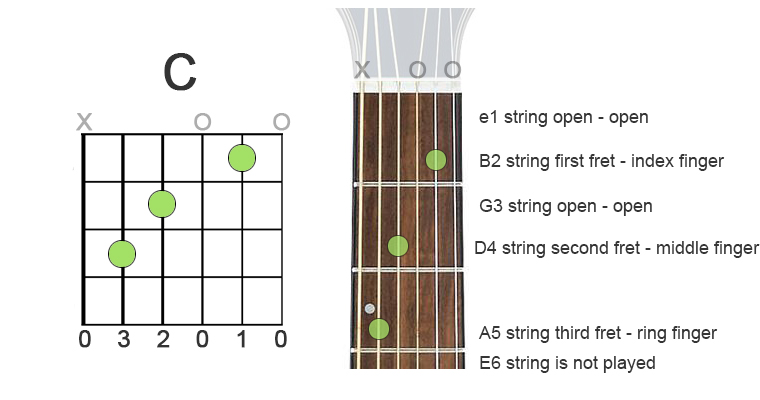
Chords are the building blocks of music, and although having a full understanding of them can take some time a great place to start is to learn the 5 basic open chord shapes. These chords are C major, A major, G major, E major, and D major. This is the first step to understanding the fretboard navigation system known as the CAGED system. This and more will be covered in our Intro To Theory lesson.
For now, we will introduce the five basic introductory open chords along with easy versions of these same chords for you to utilize as you are first starting out. Both chords are presented here in pairs. The audio samples that follow each pair will sound out the traditional chord first followed by the easy version.


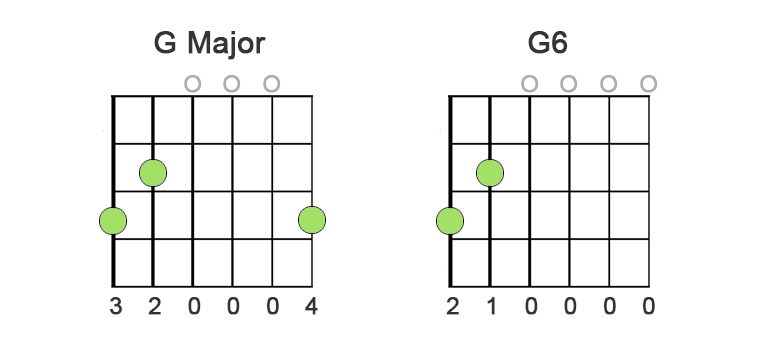
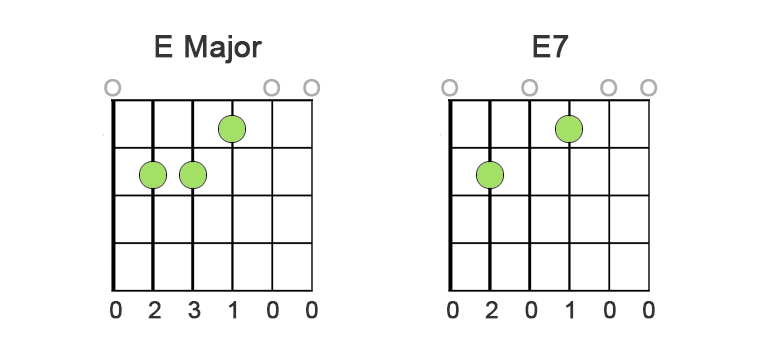
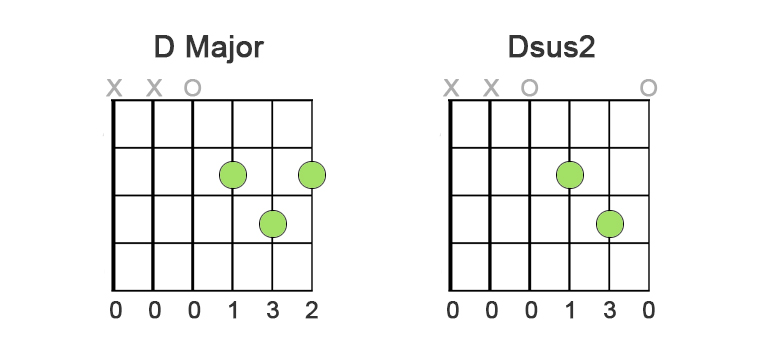
In our Reading Tablature lesson we learned about harmony and chords and how these are presented and interpreted in tablature notation. The chord boxes above are often included as part of guitar tab sheet music to further aid in the interpretation of the composition. This provides the player with two pieces of information about the chord. The chord box, and the tablature.
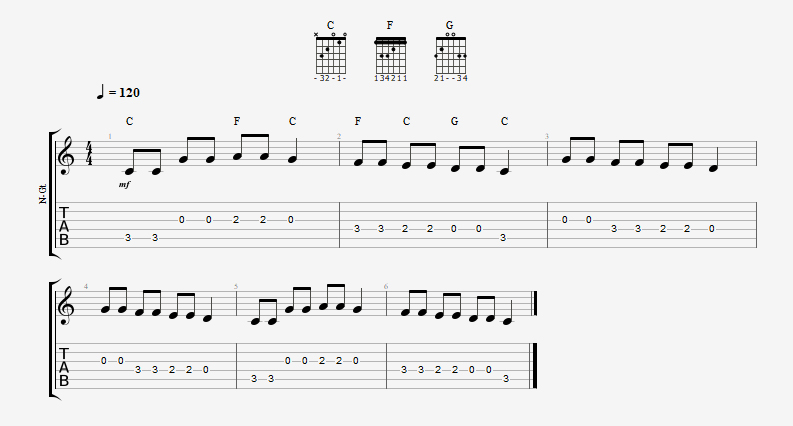
Notice the root chord letter written above the tab measures. In this piece, C, F, and G identify which chord is to be played at that point in the tab, and the chord boxes above the entire composition tells you the intended chord structure.