
Having the ability to properly tune your guitar is a valuable skill to have. It can really make the difference between a great sounding gig and a bad one. There are a variety of reasons a guitar can go out of tune, ranging from temperature and humidity to a new set of strings and poor handling practices. Whatever the reason, here are several tried and true methods to getting your guitar back in tune!
For the purpose of this lesson we are going to stick with standard tuning.
There are three popular ways to tune a guitar. All are featured in the provided Berklee Online video tutorials.

There is a wide variety of digital tuning devices available at your favorite music store. There are also countless guitar tuning apps available on the App Store and Google Play for you to download to your favorite device. One of my favorite apps is Guitar Tuner Free from GuitarTuna. These are valuable tools to have at your disposal. Check out this video from Berklee Online to learn more about digital tuning techniques.
When you don't have access to a digital tuner or tuning application you can tune your guitar by ear using unisons. A musical unison is playing the same note twice. You can play unisons on most stringed instruments because the same note occurs more than once on these instruments, such as on the guitar where the fifth fret on the low E string is the same as the open A string. This tuning method is often referred to as the 5th fret method, and also the matching method. This will require you to use a reference pitch to base your tuning on. This is most commonly acquired from another instrument that is already tuned such as another guitar or a piano, but you can also use a tuning fork or a pitch generator. For a demonstration of this technique check out this video from Berklee Online. Follow along with the video and use the following guide for more clarity.
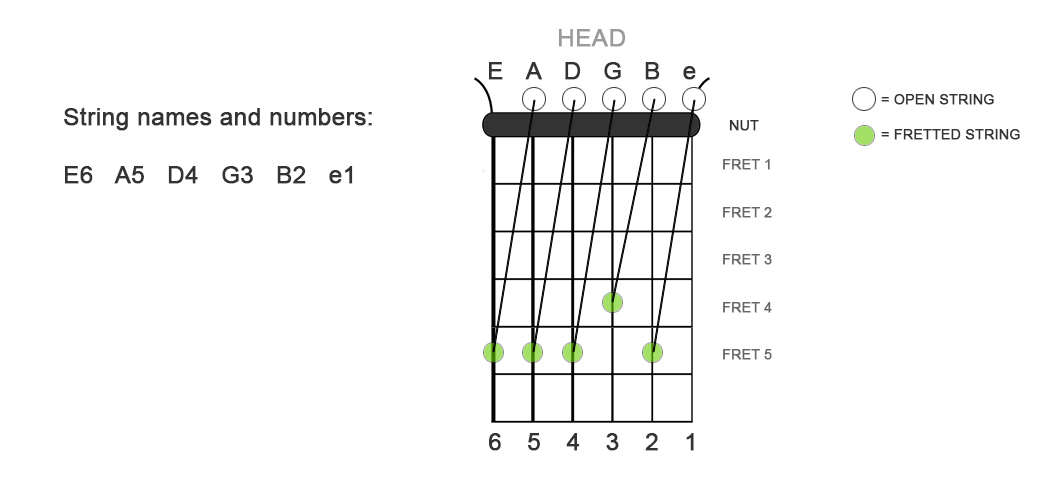
What you have just done is the standard tuning pattern, and it can be done anywhere using only your ears and a starting reference pitch.
This method is a bit trickier. You must be able to sound harmonics on your guitar. This video from Berklee Online will show you this technique. Tuning with harmonics is a rather advanced concept, but for the purpose of tuning your guitar it is quite simple.